
Growing the Next Generation of Stitchers: A conversation with Emma Homent
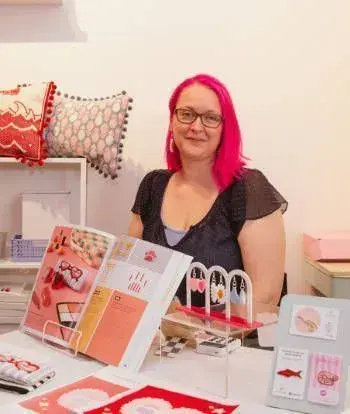
This interview is part of my Stitching Conversations series on YouTube, where I sit down with designers, authors, educators, shop owners, and other creative voices from the needlepoint and wider needlecraft industries.
For this conversation, I was delighted to welcome Emma Homent, founder of The Makers Marks and author of Needlepoint: A Modern Stitch Directory and Next-Level Needlepoint.
When people talk about the resurgence of needlepoint over the past decade, the conversation often centres on the United States. Yet across the Atlantic, Emma has become one of the most influential voices helping shape a modern needlepoint movement in the UK.
Through her books, educational content, retreats, and community-building initiatives, she has helped make needlepoint more accessible to a new generation of stitchers while championing the unique opportunities and challenges faced by stitchers outside the US market.
In our conversation, we explored Emma's journey from stitcher to designer and author, the story behind The Makers Marks, and her perspective on the future of needlepoint both in the UK and internationally.
A Creative Journey Rooted in Needlepoint
Unlike many people who discover needlepoint as adults, Emma's connection to stitching began early in life. That foundation would eventually grow into a creative business that combines design, education, and community.
Today, her work is known for its colourful, modern aesthetic that feels both contemporary and approachable while still respecting traditional needlepoint techniques. Her designs demonstrate that needlepoint can honour its heritage while continuing to evolve for modern stitchers.
Building The Makers Marks
When Emma launched The Makers Marks, she wanted to create designs that felt relevant to modern stitchers while celebrating the joy and creativity that make needlepoint so special.
Over time, the business has grown into much more than a collection of designs. Through workshops, retreats, educational content, and community initiatives, The Makers Marks has become an important part of the growing UK needlepoint scene.
At the heart of it all is a desire to make needlepoint feel welcoming and achievable, whether someone is picking up a needle for the first time or looking to expand their creative skills.
From Designer to Author
One of Emma's biggest contributions to needlepoint has been through education.
Her books have helped make decorative stitches and needlepoint techniques more accessible to stitchers around the world. During our conversation, Emma shared how writing her first book came about and how education naturally became an extension of her work as a designer.
As more people discover needlepoint through social media, educational resources remain an important bridge between inspiration and confidence. Emma's books have become trusted references for many stitchers looking to move beyond the basics and explore the creative possibilities of needlepoint.
What makes her teaching particularly valuable is its accessibility. Needlepoint may be a visual hobby, but people learn in different ways. Emma's books thoughtfully combine diagrams, photography, written instructions, and clear explanations, allowing visual learners, hands-on learners, and readers alike to find a method that works for them. By offering multiple ways to understand a stitch or technique, she lowers barriers and helps more people succeed.
A Global Craft with Local Traditions
One of the topics I was particularly interested in discussing was how needlepoint can look surprisingly different depending on where you are in the world.
Although stitchers everywhere share a love of canvas, thread, and creativity, different countries have developed their own traditions, terminology, teaching styles, and customs around the craft. Even the language we use can vary, with the same technique sometimes known by different names depending on which side of the Atlantic you're on.
Rather than viewing these differences as obstacles, Emma embraces them. Through her books, teaching, and online presence, she has done an exceptional job of helping stitchers navigate the many ways needlepoint is practised around the world. Her educational approach acknowledges that there is rarely only one "right" way to stitch and invites people from different traditions and backgrounds into the same creative conversation.
In doing so, she has helped make needlepoint feel more inclusive and connected on a global scale.
Needlepoint in the UK and Europe
Our conversation also explored the opportunities and challenges facing stitchers in the UK and Europe today.
While the United States has a larger and more established needlepoint industry, the European community continues to grow. Social media has played an important role in connecting stitchers internationally, making it easier than ever to learn from one another, discover new designers, and build friendships across borders.
At the same time, Europe faces some unique challenges. Many long-established embroidery and needlepoint companies continue to rely heavily on design collections that were originally developed for an earlier generation of customers. While these designs remain meaningful to many stitchers, they do not always reflect the tastes and interests of younger audiences discovering needlepoint today.
This can make it harder for newcomers to see themselves in the craft. In a market that already has fewer dedicated needlepoint resources than the United States, contemporary and diverse design offerings play an important role in attracting and retaining new stitchers.
Designers like Emma are helping to change that by demonstrating that needlepoint can be modern, personal, colourful, and relevant to today's creative community.
Kits, Creativity, and Stitching Confidence
Another fascinating part of our conversation centred on how stitchers are often introduced to needlepoint in different parts of the world.
In much of Europe, needlepoint is commonly sold as a complete kit. Everything a stitcher needs is included: the canvas, threads, needle, and instructions. The designer has already done much of the planning, making it incredibly easy for beginners to get started.
This accessibility is one of the great strengths of the European market. A new stitcher can simply open a kit and begin.
However, Emma noted that this approach can sometimes mean stitchers stay within those familiar boundaries. Many people learn a handful of basic stitches and continue using them throughout their stitching journey.
In the United States, by contrast, local needlepoint shops often encourage stitchers to select their own threads, personalise canvases, and experiment with decorative stitches from an early stage. This process introduces additional creative decision-making and helps build confidence in adapting, customising, and making a project truly their own.
Neither approach is better or worse. They simply reflect different traditions within the craft. Yet there is much that stitchers on both sides of the Atlantic can learn from one another.
Looking Ahead
Perhaps the most inspiring part of our conversation was Emma's belief that everyone involved in needlepoint has a role to play in helping the craft grow.
Designers, teachers, authors, shop owners, and experienced stitchers all contribute to making needlepoint feel approachable for newcomers. Every welcoming conversation, every educational resource, and every modern design has the potential to encourage someone to pick up a needle for the very first time.
Emma's work through The Makers Marks, her books, and her teaching embodies that philosophy. By making needlepoint accessible, contemporary, and inclusive, she continues to help new stitchers discover the creativity, confidence, and joy that the hobby can bring.
As the needlepoint community continues to evolve around the world, voices like Emma's are helping ensure that the craft remains vibrant, welcoming, and relevant for generations to come.
Watch the full interview below:


Comments